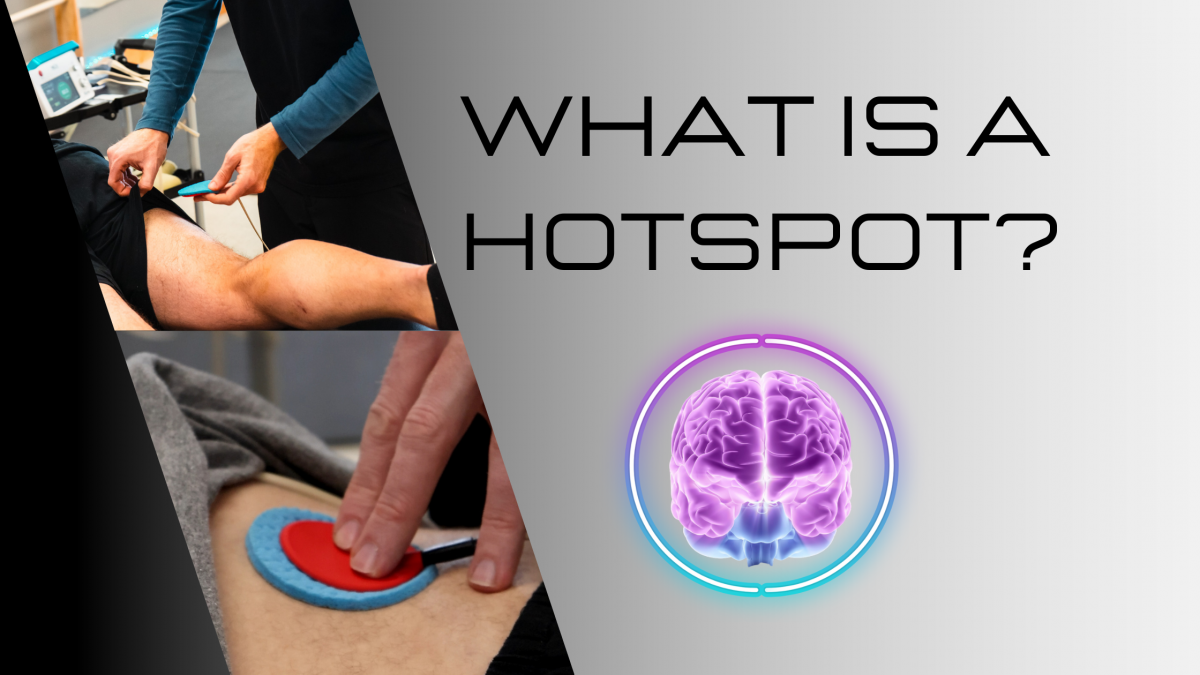
What is a Hot Spot?

CHARACTERISTICS OF A HOTSPOT

Have you ever wondered why we call them hotspots???

Myofascial trigger points (MTrPs) are localized areas of hyperirritable muscle tissue that can cause pain and dysfunction. Temperature changes associated with MTrPs can vary depending on the stage of the trigger point and individual factors. However, here are some general temperature changes that may be observed:

1. Increased Local Temperature: MTrPs often exhibit increased local temperature compared to surrounding tissue. This is due to increased metabolic activity and blood flow in the affected area. The heightened metabolic activity may lead to a sensation of warmth when palpating the trigger point.

2. Referral of Heat: In some cases, heat may be referred from the trigger point to other areas of the body. This phenomenon, known as referred heat, can occur along with referred pain and other sensory disturbances associated with MTrPs.

3. Changes in Skin Temperature: Skin temperature overlying MTrPs may be elevated compared to nearby unaffected areas. This increase in skin temperature is believed to result from increased blood flow to the region, which is part of the body's inflammatory response to the presence of the trigger point.

4. Variability in Temperature: The temperature changes associated with MTrPs may be dynamic and can vary depending on factors such as activity level, stress, and environmental conditions. For example, physical activity and stress can exacerbate symptoms and increase local temperature, while relaxation techniques and cold therapy may help reduce temperature and alleviate symptoms.

It's important to note that temperature changes associated with MTrPs are just one aspect of the complex pathophysiology of these muscle abnormalities. Other factors, such as muscle tension, stiffness, and altered neuromuscular function, also contribute to the development and maintenance of trigger points.

These observations are based on clinical findings and research studies examining the characteristics of MTrPs. However, individual responses to trigger point therapy and temperature changes may vary, and further research is needed to fully understand the mechanisms underlying these phenomena.

Evidence Based

References:

1. Dommerholt, J., & Gerwin, R. D. (2006). High Prevalence of Myofascial Trigger Points: National Injustice. Journal of Manual & Manipulative Therapy, 14(4), E10–E12.

2. Simons, D. G., Travell, J. G., & Simons, L. S. (1999). Myofascial pain and dysfunction: the trigger point manual (Vol. 1). Lippincott Williams & Wilkins.
IMG_6128

Hi, I'm Ian

I am the Founder and Director of Neuroscience at Pure Neurology, LLC. I retired from a career in EMS as a Paramedic, after a line-of-duty injury left me with a chronic nerve condition known as Complex Regional Pain Syndrome. Since my diagnosis in 2015, I have dedicated my life to researching this condition and how to improve it. I was faced with the prospect of amputation, which led me to research alternative treatments. I began working with functional direct-current neuromuscular stimulation in 2016, and I have been ever since. I currently advise NeuX Technologies out of Tampa, FL and work exclusively with NeuX Interactive Neuromuscular Stimulation. I hope that this blog is a valuable resource for you if you have an interest in learning more about INS.

DISCLAIMER: THIS WEBSITE DOES NOT PROVIDE MEDICAL ADVICE
The information, including but not limited to, text, graphics, images and other material contained on this website are for educational and informational purposes only. No material on this site is intended to be a substitute for professional medical advice, diagnosis or treatment. Always seek the advice of your physician or other qualified health care provider with any questions you may have regarding a medical condition or treatment and before undertaking a new health care or fitness regimen, and never disregard professional medical advice or delay in seeking it because of something you have read on this website or any of our affiliated media outlets or accounts.
Coherence

This model of coherence suggests that the neurocommunication between the heart and the brain is in fact, a two way street.

THE HEART - A TOPIC FOR DEBATE

In western science, the heart is considered to be a pump. The body needs oxygenated blood to survive, and the heart provides it, with some assistance from the lungs. Deoxygenated blood enters into the heart from the body via the top chamber known as the right atrium. From there it enters the right ventricle and gets sent to the lungs, where carbon dioxide is off-loaded, and oxygen is bound to the hemoglobin to be transported. From the lungs, the blood enters the left atrium where it is transferred to the left ventricle and then thrust into the arteries and circulated through the body. But did you also know that the heart is a generator?

Heart muscle is normally considered to have a property that we refer to as automaticity. According to Merriam-Webster, automaticity is defined as: the capacity of a cell to generate an action potential spontaneously without an external stimulus. This means that the heart has the capability to generate its own heartbeat! Very interesting when you consider the scope of our discussion today.

But we are examining contrasting viewpoints here and discussing ongoing research into the nature of the essence of humanity. So we have to consider all angles. Arnold Martin Katz was an American medical doctor, professor of cardiology, medical researcher, and author. He had the following to say on the matter.

All adult cardiac myocytes can respond to electrical stimuli and conduct action potentials, but the working cells of the atria and ventricles generally lack automaticity …
- Arnold M. Katz, Physiology of the Heart, 5th edition

In the realms of understanding the human body's energetic processes, two primary contrasting paradigms have emerged. First we have the Western view of action potentials, and then we have the Eastern perspective of Qi (chi).

While Western science has long held sway over our understanding of physiological phenomena, we would be remiss to discount the profound insights offered by Eastern philosophies, particularly in the concept of Qi.

Western science, with its meticulous dissection of the human body and painstaking analysis of observation, has led us to comprehend the body's mechanisms in intricate detail. We can now understand each bodily system and how it operates. Entire specialties have been built around each one, which physicians dedicate their entire lives to learning.

We have incredible illustrations, imaging, and insight into the vast reaches of the human body, mind, and psyche. Within the labyrinth of our minds, billions of neurons weave a tapestry of complexity, yet our understanding merely grazes the surface of their intricate dance. Western science can tell us how many neurons are firing in the brain, how electricity is passing through the heart, creating atlases of the human body in which the expedition through the body of the human being has been thoroughly documented. But it can’t really tell You where (You) reside. You inhabit your brain, but it is just an organ, it is not (You).

Hidden Worlds

Western science looks at action potential, the electrochemical process that facilitates nerve impulses, stands as a cornerstone of this understanding. It's a marvel of scientific achievement, providing a mechanistic explanation for the propagation of signals within the nervous system.

The western view does not have a specific stance on the concept of a soul; primarily focusing on the physical aspects of health, relying on empirical evidence, scientific research, and biological explanations for phenomena. As such, discussions about the soul typically fall outside the scope of the allopathic view.

Despite this fact, for centuries, the heart has been revered as the origin of emotion, courage, and wisdom. Isn’t it interesting that as we experience things like love, happiness, anger, remorse, and grief, we seem to do so primarily with a specific organ… The heart.

THE CLASH - SCIENCE VS PHILOSOPHY

In contrast, the eastern viewpoint, rooted in traditions such as Traditional Chinese Medicine (TCM) and Ayurveda, often incorporates the concept of a soul or a similar notion within its framework. Overall, Eastern medicine tends to have a more holistic view of health that encompasses not only the physical body but also the mind and spirit.

So it should come as no surprise that research transcending the rigid bounds of allopathy indicates that there is more to the person than the sum of components that make up their anatomy, and since Dr. Katz wrote his statement about automaticity, numerous studies have shown that the heart has a type of coherence in its ability to influence the brain.

This is further corroborated by research indicating that when individuals experience stressful or draining emotions, like frustration and anger, it results in heightened chaos within the higher-level brain regions and the autonomic nervous system. These effects then manifest in heart rhythm irregularities and if left unchecked, cause a cascading negative impact on the operation of nearly all bodily systems.

This new perspective indicates that the heart is actually a highly complex information- processing center, with the ability to influence our self-regulatory capacity, cognitive function, including mental clarity, and even our emotional stability and resilience. So, as it turns out, the heart may in fact be more than just a pump.

In one particular study "Dynamic Correlations Between Heart and Brain Rhythm During Autogenic Meditation" by Kim et al. (2013), the researchers shed light on the intricate relationship between heart and brain activity during the practice of autogenic meditation. Through their investigation, they uncover dynamic correlations that highlight the profound interplay between physiological and mental states during meditation.

By examining the simultaneous changes in heart rate variability (HRV) and electroencephalogram (EEG) patterns, the study reveals how autogenic meditation induces a state of coherence between the heart and brain rhythms. This coherence suggests a harmonious alignment of physiological and cognitive processes, indicative of deep relaxation and heightened self-awareness.

The findings of this study shed light on the dynamic interrelations between heart and brain activity, the researchers were able to offer valuable insights into the mechanisms underlying meditative practices and their impact on holistic health.

In this manner, more and more research is now contributing to our theoretical understanding of the intricate mind-body connection. Specifically highlighting the bi-directional relationship between psychological processes and physiological responses, emphasizing the need for a holistic approach to health that integrates both dimensions, uniting eastern philosophy with western tenacity.

ON COHERENCE

Ideas encapsulated within the notion of coherence have been recognized as pivotal across disciplines including quantum physics, physiology, and social science. While various forms of coherence exist, the term consistently signifies a state of harmonious interconnection, correlations, and interactions among the components within a system.

This model of coherence suggests that the neurocommunication between the heart and the brain is in fact, a two way street. Furthermore, the Coherence Model suggests that patterns in the activity of cardiovascular afferent (sensory) neuronal traffic can significantly influence cognitive performance, emotional experience and self-regulatory capacity.

If we take this new research into light, we can deduce that self-induced positive emotions can shift entire systems into a state of improved performance and overall well-being.

According to Ernst G. (2017), the systems that have control over heart rate variability (HRV) include:

1. Autonomic Nervous System (ANS)

2. Central Nervous System (CNS)

3. Respiratory System

4. Endocrine System

5. Cardiovascular System

Further research into the heart-brain-connection will undoubtedly reveal that the profound implications of heart-brain coherence cannot be overstated.

Its significance transcends conventional boundaries, intertwining physiological health with mental and emotional well-being. Yet, despite its immense impact, the importance of heart-brain coherence has been vastly underestimated.

As we strive for a more comprehensive understanding of holistic human health and resilience, let us recognize and embrace the pivotal role that heart-brain coherence could play in our holistic well-being. Only by acknowledging and nurturing this fundamental connection can we begin to bridge the gap between physicality and consciousness.

To underscore this conclusion, I would like to share a statement from the Heart Math Institute, a research and education organization dedicated to studying the physiological and psychological effects of the heart's activity on overall well-being.

At the HMI Research Center, we have found that the heart plays a central role in the generation of emotional experience and therefore, in the establishment of psychophysiological coherence. From a systems perspective, the human organism is truly a vast, multidimensional information network of communicating subsystems in which mental processes, emotions and physiological systems are inextricably intertwined. Whereas our perceptions and emotions were once believed to be dictated entirely by the brain’s responses to stimuli arising from our external environment, the emerging perspectives in neuroscience more accurately describe perceptual and emotional experience as the composite of stimuli the brain receives from the external environment and the internal sensations or feedback transmitted to the brain from the bodily organs and systems. Thus, the heart, brain, nervous, hormonal and immune systems must all be considered fundamental components of the dynamic, interactive information network that determines our ongoing emotional experience.
McCraty, R., Science of the Heart Vol 2 - Exploring the role of the heart in human performance. (2015) p. 29
Evidence Based

sources:

1. Laszlo, E., Quantum Shift in the Global Brain: how the new scientific reality can change us and our world (2008), Rochester, VT: Inner Traditions.

2. Damasio, A.R., Descartes’ Error: Emotion, Reason and the Hu- man Brain (1994), New York: G.P. Putnam’s Sons.

3. Ernst G. (2017). Heart-Rate Variability-More than Heart Beats?. Frontiers in public health, 5, 240.

4. Kim, D. K., Lee, K. M., Kim, J., Whang, M. C., & Kang, S. W. (2013). Dynamic correlations between heart and brain rhythm during Autogenic meditation. Frontiers in human neuroscience, 7, 414.

5. Rosch P. J. (2009). Bioelectromagnetic and subtle energy medicine: the interface between mind and matter. Annals of the New York Academy of Sciences, 1172, 297–311.

6. Lehrer, P. M., Vaschillo, E., & Vaschillo, B. (2000). Resonant frequency biofeedback training to increase cardiac variability: rationale and manual for training. Applied psychophysiology and biofeedback, 25(3), 177–191.

7. McCraty, R., & Zayas, M. A. (2014). Cardiac coherence, self-regulation, autonomic stability, and psychosocial well-being. Frontiers in psychology, 5, 1090.

8. McCraty, R., Science of the Heart Vol 2 - Exploring the role of the heart in human performance. (2015), Boulder Creek, CA: HeartMath Institute.

IMG_6128

Hi, I'm Ian

I am the Founder and Director of Neuroscience at Pure Neurology, LLC. I retired from a career in EMS as a Paramedic, after a line-of-duty injury left me with a chronic nerve condition known as Complex Regional Pain Syndrome. Since my diagnosis in 2015, I have dedicated my life to researching this condition and how to improve it. I was faced with the prospect of amputation, which led me to research alternative treatments. I began working with functional direct-current neuromuscular stimulation in 2016, and I have been ever since. I currently advise NeuX Technologies out of Tampa, FL and work exclusively with NeuX Interactive Neuromuscular Stimulation. I hope that this blog is a valuable resource for you if you have an interest in learning more about INS.

DISCLAIMER: THIS WEBSITE DOES NOT PROVIDE MEDICAL ADVICE
The information, including but not limited to, text, graphics, images and other material contained on this website are for educational and informational purposes only. No material on this site is intended to be a substitute for professional medical advice, diagnosis or treatment. Always seek the advice of your physician or other qualified health care provider with any questions you may have regarding a medical condition or treatment and before undertaking a new health care or fitness regimen, and never disregard professional medical advice or delay in seeking it because of something you have read on this website or any of our affiliated media outlets or accounts.